
Signs of Sewer Backup to Watch for Inside the House
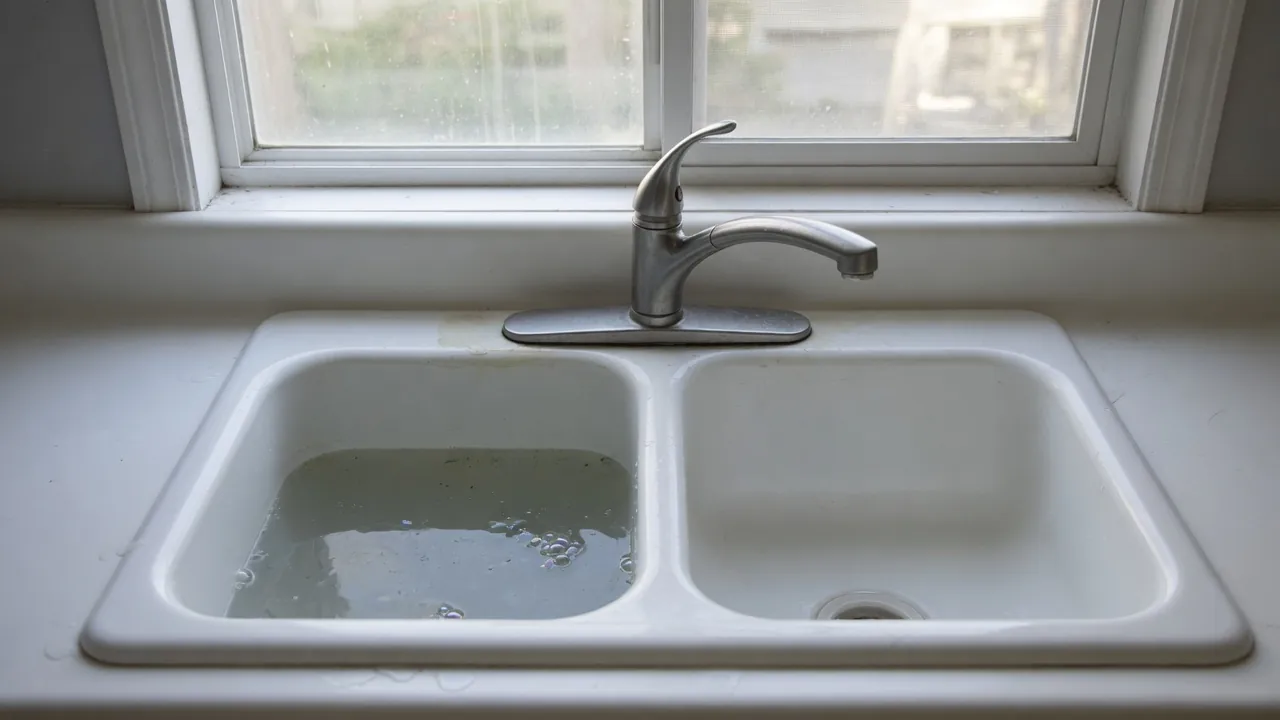
Kitchen sink basin holding murky gray water with small bubbles beneath a stainless faucet.

Signs of sewer backup tend to show up in the plumbing before any water reaches the floor. Utilities that publish checklists for homeowners keep naming the same handful, and most of them involve more than one drain.

How many fixtures are affected matters more than any single symptom. A slow bathroom sink is a nuisance. A slow sink plus a gurgling toilet plus a bad smell near the floor drain is a pattern, and patterns are what the sources below describe.

The usual list: slow drains in several places at once, gurgling after a flush or after a tap is shut off, water appearing in a second fixture when a first is used, foul odor from drains, and a backup that repeats even after routine maintenance.

One slow drain versus many

Indian River County's utility department puts the difference plainly: one slow drain is not a sign of trouble, but several is an indicator that something is wrong. The drains closest to the clog tend to be slowest. Naperville's utility draws a similar line from the other side, saying that trouble at only one fixture, with all other drains fine, is an internal problem.

Sounds, then fixtures reacting to each other

Indian River describes a "glug, glug, glug" after a toilet is flushed or a tap is turned off as a sign that something is blocking the line and making it hard to drain. A sewer authority in Oregon lists a toilet that gurgles after being flushed in the same family of signs.

The stronger sign is cross-talk. Indian River says a main-line clog can show up as brackish water backing into a sink or shower when the toilet is flushed, and sometimes when the washing machine runs. The water cannot get through the clog, so it goes wherever it can. The tub gets a page of its own: when the bathtub is the drain that fills.

Smell and sight

Indian River also lists a foul odor from drains as a signal that sewage is collecting in them. The Oregon authority adds odors near drains or outside where the sewer line runs, and constantly clogged drains. It also mentions a sinkhole near the lateral, a sign that points outdoors rather than inside.

An odor alone is ambiguous. Wisconsin's health department advises flushing floor and sink drains with water so the traps do not dry out, a reminder that a smell can come from plumbing that is not backing up at all.

What the lowest spot shows first

When sewage does appear, Madison's engineering division notes that the lowest level of a house is where it normally surfaces, near a floor drain, toilet or shower. Once water is on the floor, the CDC's advice for floodwater applies, and boots, gloves and goggles come before wading in.

Acting on the signs

Indian River's first instruction for a suspected main-line clog is to stop using water, because every drop sent down the drain adds to the problem. Its second is to report it to the utility if liquid shows at the cleanout, since the location of the blockage decides who is responsible. The causes of a blockage get their own post, and Pittsburgh Water's reporting steps are in a Pittsburgh page on handling the report.

When sewage has already reached finished space in a home we serve, call (855) 433-1072 or use Contact Us.

Prefer the phone?

Sewage in the house right now?

Call our crew and tell us what you're seeing.

Common questions

Not necessarily. Naperville treats trouble at a single fixture as an internal problem, while Indian River says several drains reacting together point to the main line.
No source recommends testing. An Oregon authority says a washing machine or dishwasher can cause bathtub backups and advises not running heavy-flow appliances until slow drainage is resolved.
Madison's engineering division says the lowest level of the home, near a floor drain, toilet or shower.