
Sewage Backup in Bathtub: A Drain That Shows the Problem First

Sewage backup in bathtub drains is alarming because the tub is the one place in a bathroom nobody expects wastewater to come from. It has an explanation, though, and the explanation also says what to do next.

Utilities that field these calls describe a tub or shower drain as one opening among several on a shared line. When that line is slowed or blocked, the water goes up through whichever opening it can reach.
Why the tub, of all places

Madison's engineering division says sewage tends to collect at whichever drain, toilet or shower sits lowest in the house. A tub need not be in a basement for that to hold; it only has to sit lower than the other openings on the line.

Indian River County's utility department gives the everyday version: a flushed toilet sends brackish water up a sink or shower drain, and a washing machine can do the same. Blocked water, it says, goes wherever it can. The wider list of early warnings is in a post on plumbing signs that come first.

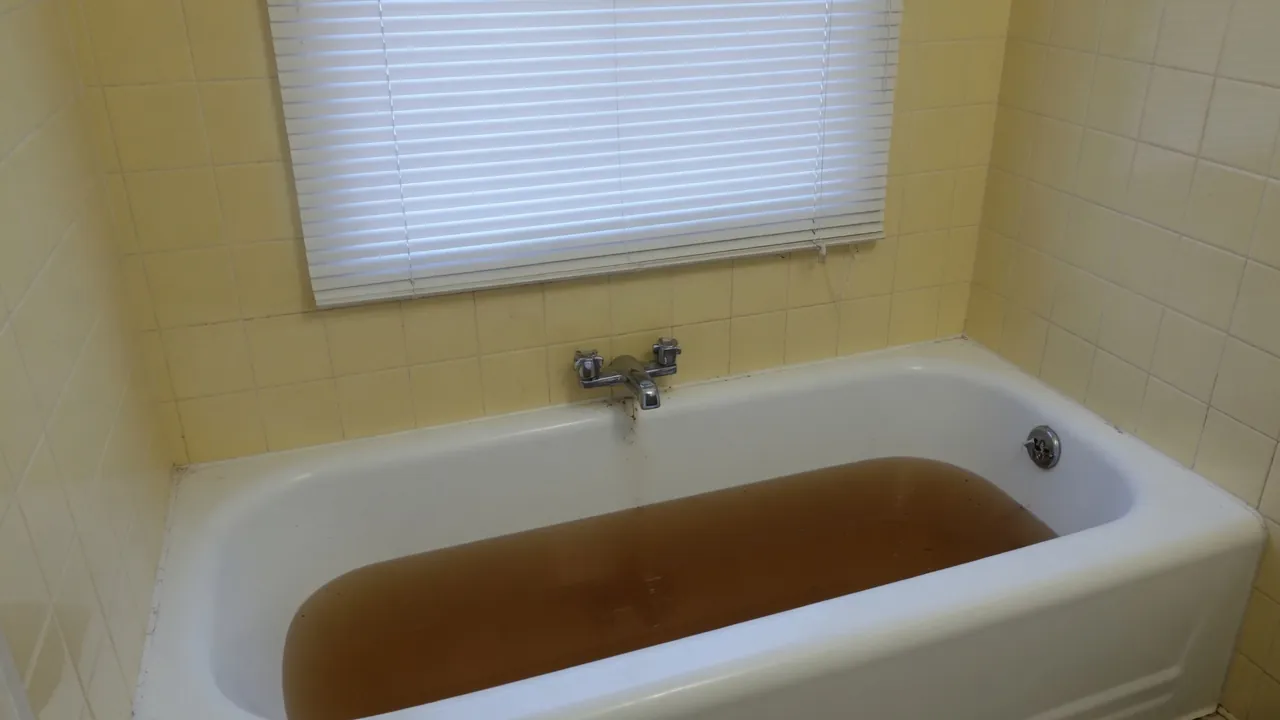
White bathtub with murky brown water, a chrome faucet and pale yellow wall tiles.

While it is still happening

Questions about a filling tub reach sewer authorities directly. One Oregon sewer authority answers a filling tub with a phone call, then adds that a washer or dishwasher can trigger tub backups and should stay off until the slow drainage is sorted out. Indian River's first step is similar: stop using water.

Seattle's utility goes further on one point. It says not to try to stop the flow of sewage coming up through the floor drain or any other drain. The contaminated water has to be left to do what it does while the cause is found.

Cleaning the tub and bathroom afterward

Once the water has gone back down and the cause is dealt with, the tub is a hard surface, which makes it easier to clean than carpet. The steps health departments give for hard surfaces run in this order:

  1. Put on boots, gloves and eye protection; Seattle adds long sleeves and long pants.
  2. Wash the surface with hot water and a mild detergent such as dish soap; grime left behind, Ohio's health department warns, defeats the disinfectant.
  3. Disinfect with a household cleaner labeled as bactericidal, or with a chlorine bleach solution. Ohio quotes EPA's recommendation of half a cup of bleach per gallon of water, left in contact with the surface for at least a minute. Colorado's health department sheet lists a weaker mix, a quarter cup per gallon, so the product label and the local health department are worth checking.
  4. Rinse if the product label calls for it, and ventilate the room.

Bleach and ammonia must never be combined; Seattle, Ohio and Connecticut all warn about the fumes. How to clean sewage backup in bathtub drains and surfaces is therefore mostly a matter of order: wash, then disinfect, then let it dry.

Soft items next to the tub

Porous things beside the tub are another matter. Ohio says absorbent items that touched sewage go in the trash unless a proper cleaning and disinfecting is possible; its examples include cardboard, paper products, cosmetics, mattresses and pillows. In a bathroom that means a bath mat or a cardboard tissue box left on the floor should be considered for the trash.

The health side has a post of its own, on how illness from sewage happens, and the early steps for Pittsburgh are in a Pittsburgh walk-through of a backup's first moves.

Nobody here scrubs tubs; the site only refers jobs. For the bathroom floor and beyond, the Contact Us page reaches a contractor near you.

Common questions

No. Clear standing water in a tub can have a different cause, but Madison and Indian River both describe sewage rising there when the shared line is blocked, and if wastewater comes up, treat it as contaminated.
Ohio's health department gives one rule for hard surfaces generally: clean with detergent and hot water first, then disinfect, and keep the room ventilated.
Stop using water. Indian River County lists it as the first step for a suspected main line clog.