
Sewage Smell After Heavy Rain: What the Timing Can Tell You

A sewage smell after heavy rain feels like a message, and sometimes it is one. Wet weather and drains share a connection that utilities describe openly, though the smell alone cannot say which of several explanations applies.

This post separates the harmless possibilities from the ones worth reporting. If water has already reached the basement floor, the Pittsburgh page on sewage in a basement after a downpour covers that situation.
Why rain and sewer odor travel together

Connecticut's health department describes storm water and ground water pouring into sewage systems until they are swamped, and says the result can be backups in basements. EPA's overflow pages come at it from the utility side, listing leaks and cracks in sewers that admit stormwater and groundwater and overload the pipes. Pittsburgh Water names an overwhelmed system in heavy rain as a frequent cause of backups.

A system under that kind of strain is a candidate when the smell appears only in storms. It is not the only one.

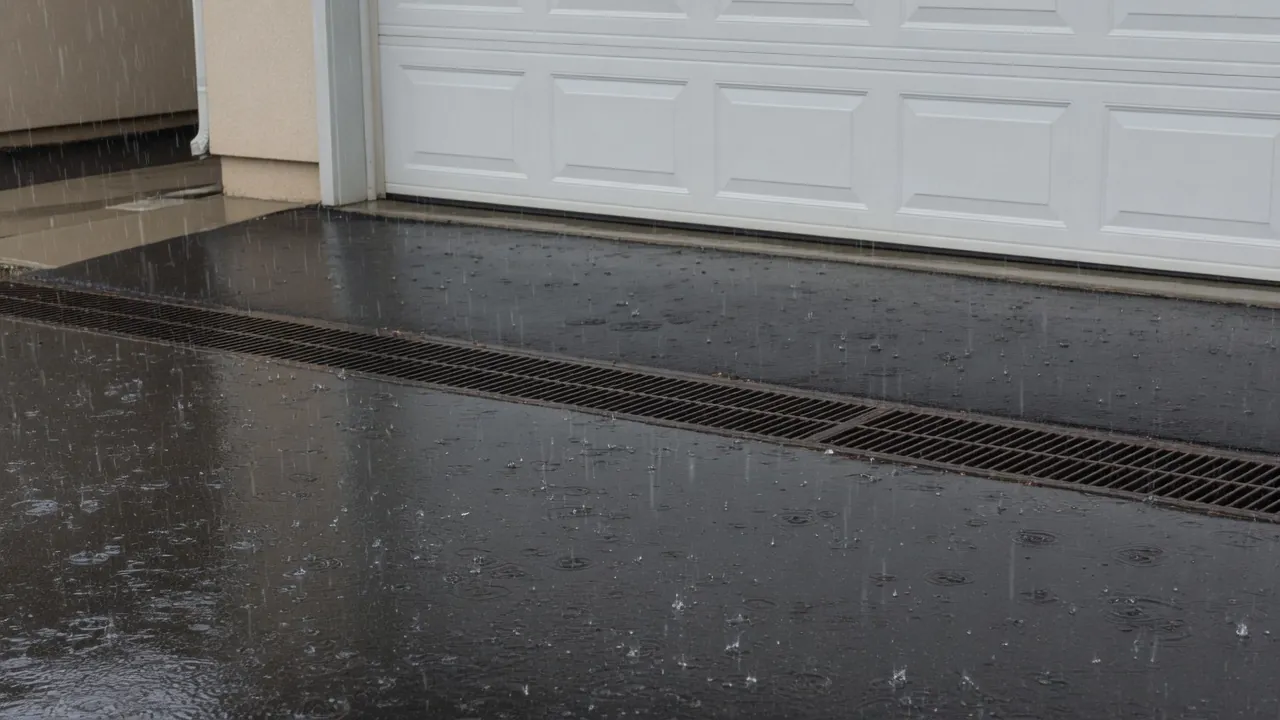
Rain splashing on a dark driveway where a long metal channel drain runs in front of a white garage door.

Checks that do not depend on the weather

A storm is also when people stay indoors with the windows shut and finally notice a basement odor. Fairfax County and Albuquerque's utility authority both begin with the same step: fixtures that go unused can lose the water in their traps, and a minute of running water restores the seal. A floor drain that sits dry through summer is the classic case, and a longer list of indoor causes takes in vents and toilet seals.

Published odor guidance does not tie dry traps or blocked vents to wet weather specifically, so these checks are the same whatever the forecast.

Drains and curb inlets outdoors

Not every storm-day odor is in the plumbing. Denver's wastewater division explains that some storm drains are siphons that hold water between rainfalls, and what is left can turn stagnant and smell after a storm. A smell noticed on the sidewalk or near a curb inlet may be that, not a sewer main.

Odor near the house itself can also come from a vent or a septic setup, which is sorted out in a post about smell outside the house.

Once liquid shows up

If liquid is coming up a drain, the advice changes. Pittsburgh Water lists a backup that happens only during a rain event as one of the situations that brings a crew out to find whether the fault lies in the sewer main or in the lateral. The utility must fix a cracked or blocked main, while the lateral falls to whoever owns the property. It suggests talking with neighbors while waiting, and it leaves cleanup for later, once the cause is repaired and no sewage remains standing.

Once the source is repaired and the water is gone, getting a lingering sewage odor out of the house is a separate job.

Naperville, Illinois, asks residents to tell the city before hiring a plumber for a backup, stressing heavy rainfall. Practice varies by place, so the local sewer office is the right first call.

What goes to a contractor and what does not

Smell alone is a plumbing and utility question. A contractor enters the picture only when sewage has actually reached floors or belongings. If that happens, Contact Us is the route to a company that works in your area.

Common questions

It is worth a call to the local sewer office to ask. Naperville's request to be told first concerns backups during rainfall.
Yes, it can. Fairfax and Albuquerque both say a dry trap lets odor in, and refilling it is the first check.
The utility pages do not say. If it fades only after a storm, mention that pattern when reporting, as Pittsburgh Water treats rain-only backups as a distinct case.