
Sewage Smell Outside the House: Vent, Septic Tank or Sewer Line?

A sewage smell outside the house is easy to notice and hard to place. Open air spreads odor around, and the same smell can come from a vent pipe, a septic system, a damaged line or a city main, with wind deciding where you notice it.

This post is about odor in the yard and around the foundation. If wastewater is visible on the ground, the better starting point is the guide to raw sewage on a property.
Locate where it is strongest

The Hocking County health department suggests identifying the origin before anything else. Near the house, an odor could be a broken sewer pipe, or simply the wind pattern around the building. Homes in valleys, forested areas or low areas may not get a breeze that carries odors away.

If the whole yard smells of septic or sewer gas, the same department points to the plumbing vent, where extending the vent pipe or adding a carbon filter can help spread or control the smell.

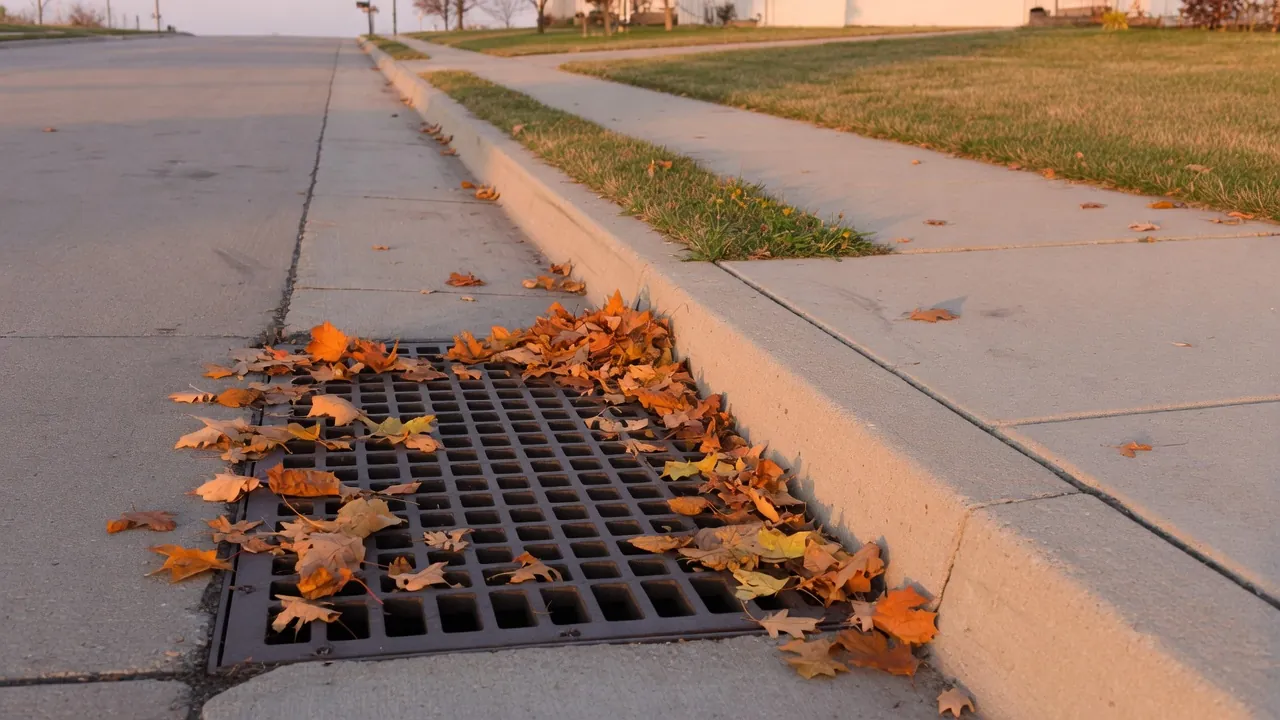
Metal storm drain grate scattered with orange and brown autumn leaves beside a curb, a grass strip and a sidewalk.

Vents are supposed to smell a little

EPA's septic FAQ explains that an odor may be coming from a roof vent or other vent pipe that lets system pressure equalize, which is a normal part of the system. Sometimes vents can become obstructed. Hocking County adds that a filter on a vent can clog with moisture and freeze in winter, which then causes septic odors in the building.

Near the septic tank

For homes with a septic tank, Hocking County lists the lid. A damaged rubber seal on a lid can leak odor, and a leaking concrete lid can get a temporary seal that still allows maintenance, though the lid should not be covered with soil because the tank is serviced from ground level. The same document says additives are not recommended for odor.

EPA lists warning signs near the tank or drainfield: sewage odors, standing water or damp spots over the tank, and soft, wet or spongy soil when there has been no significant rain. EPA says an exact cause cannot be diagnosed remotely and recommends calling a local septic service provider or plumber.

Odor from the public sewer or curb

Public sewers are different. Fairfax County tells residents who detect an odor outside the home to contact the utility's customer center. Albuquerque's utility likewise runs a page for reporting sewer odor. Which office takes the report depends on where you live, so a city or county sewer office is the natural first stop for odors near a street.

Wet ground and puddles

Wet ground, pooling water or a sewage-smelling puddle shifts the problem from odor to contamination.

When wastewater is surfacing and the source is unclear, three likely sources of sewage in the yard are sorted by drainfield, house line and city main.

Connecticut's health department says children and pets should stay clear of sewage, and Pittsburgh Water leaves cleanup until the source is repaired. Nobody on this site does that work; Contact Us passes the request to a contractor who serves your area.

If the odor also shows up indoors, a separate list of likely indoor sources is the place to go next.

Common questions

Not by itself. EPA says vents release pressure and an odor from one is a normal part of a septic system, unless the vent is obstructed.
Hocking County says wind patterns, valleys and low areas can stop odors from dispersing, so the same source may smell stronger on some days.
For a septic system, EPA recommends a local septic service provider or plumber. For a public sewer, Fairfax directs residents to the utility.