
Is a Flooded Basement Dangerous? What Agencies Warn About
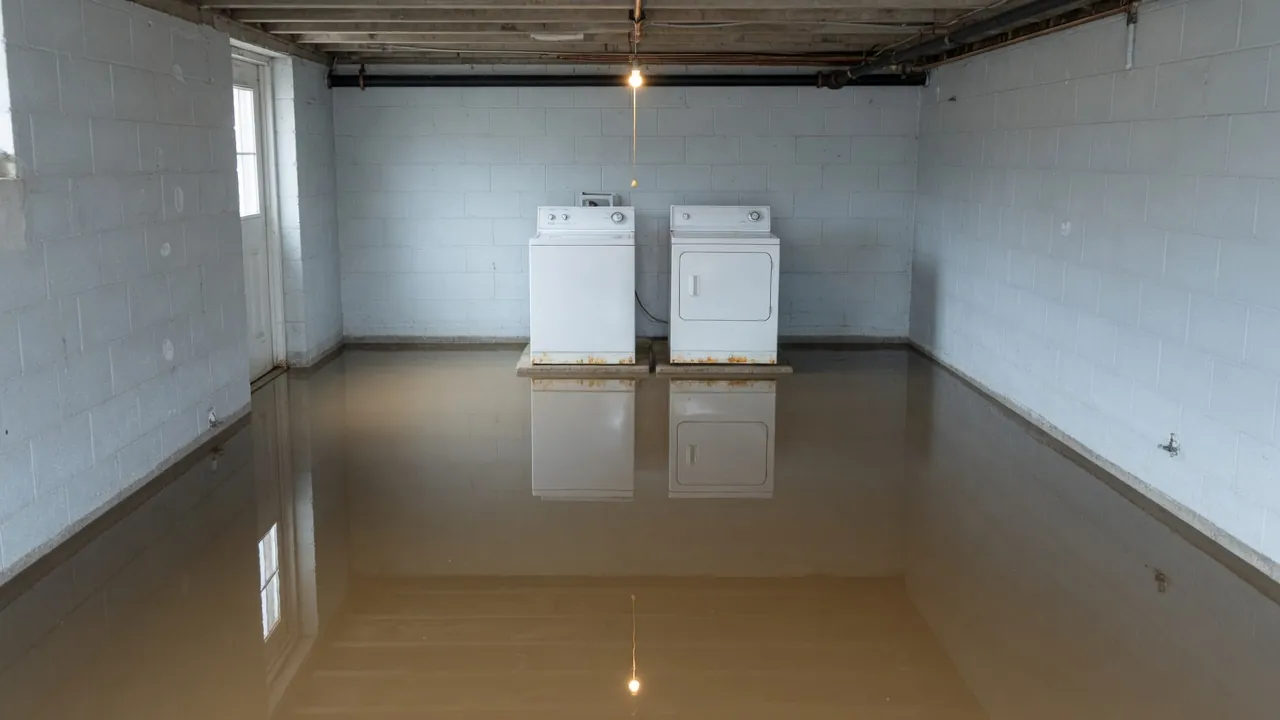
Basement floor covered in murky brown water with a white washer and dryer on the far wall and a bare bulb hanging overhead.

Is a flooded basement dangerous? Yes, in several separate ways, and the water itself is only one of them. CDC, FEMA, the Red Cross and Pittsburgh Water each describe a different risk, and they stack up when the water has come in with a heavy storm.

This post is a safety overview, not a how-to. If the water came with a sewer backup after rain, read sewage in the basement after heavy rain first.

The water may not be clean

CDC says floodwater can contain human and livestock waste, along with household, medical and industrial hazardous waste, and that nobody knows exactly what a given flood carries. Possible results of contact, per CDC, include infected wounds, rashes and stomach or bowel illness, and says the surest protection is to stay out of the water. CDC also tells readers to expect that floodwater may contain sewage, which can cause diarrheal disease if anything contaminated is eaten or drunk.

Pittsburgh Water says sewage contains bacteria, viruses and other pathogens that can harm health and can contaminate the area where a backup happened, often the basement.

Electricity and standing water

FEMA warns about electrocution: do not touch wet electrical equipment or stand in water while doing so, and turn off the electricity if it is safe. CDC says to shut off power and gas in the home to avoid fire, electrocution or explosions, and never to switch power on or off while standing in water. When the main switch can only be reached through standing water, CDC says an electrician should turn it off.

That order matters: power comes before pumps, vacuums or anything else plugged in.

What water does to walls

The Red Cross says pumping out a flooded basement should be gradual, about one-third of the water per day, because removing it all at once lets pressure from saturated soil outside collapse basement walls. Denver's flood handbook adds that deeper water puts more pressure on walls and floors, especially in the basement.

For a homeowner this means the safest course is not always the one that clears the room soonest.

Boots, gloves and what to discard

For anyone who must wade in, CDC lists boots, gloves and goggles, hot-water washing of contaminated clothes, and hand washing after contact. It also says to keep children from playing in floodwater areas and to throw away what cannot be disinfected, such as rugs, cloth wall coverings and drywall.

How long germs persist is its own question; a post on sewage bacteria survival goes through it.

Mold follows the water

After the water is out, CDC says to dry the space with fans and dehumidifiers to prevent mold. A house that has flooded may be contaminated with mold or sewage, in CDC's words, and either can make people ill.

If the water turns out to be sewage, the order of work from protection to discarding to drying is laid out in the order of steps for cleaning a sewage-soaked basement.

Scope of sewage-only cleanup

The cleanup companies reached through this site deal with sewage-contaminated water. A basement flooded only by clean water or ordinary groundwater is outside what is offered here. If sewage is involved, Contact Us can route a request to a contractor nearby.

Prefer the phone?

Sewage in the house right now?

Call our crew and tell us what you're seeing.

Common questions

CDC says not to stand in water to work with electricity and to wear boots, gloves and goggles if entering floodwater is unavoidable. The safest first look is from the stairs.
The Red Cross says to lower the level gradually, about one-third per day, to protect the walls.
No. CDC says floodwater may contain sewage, so it is treated as a possibility until known otherwise.