
Basement Sewage: How to Clean Up Sewage in Basement Rooms, in Order, and Where DIY Ends

How to clean up sewage in basement rooms is a question with two halves: the steps, and the point at which a homeowner should stop doing it alone. Health departments cover both, and they rarely sound as confident about the second half as the first.

Everything here applies only after the source has been dealt with. Pittsburgh Water's sequence for a backup is repair, then drainage, then cleanup, and a sewer utility or plumber has to settle the first two. The outdoor version of this job has a separate Pittsburgh checklist for sewage on a lawn.
Decide first whether this is a DIY job

Connecticut's health department frames hiring versus doing it yourself as a weighing of time against money, and lists situations that favor a professional:

  • Insurance will pay for it.
  • Ductwork in a forced-air or central-air home has been contaminated.
  • Sewage sat in finished living space for longer than a day.
  • The job is simply too large or complicated.

A middle path exists too: hire a professional to assess the damage and write a scope of work, then follow it yourself.

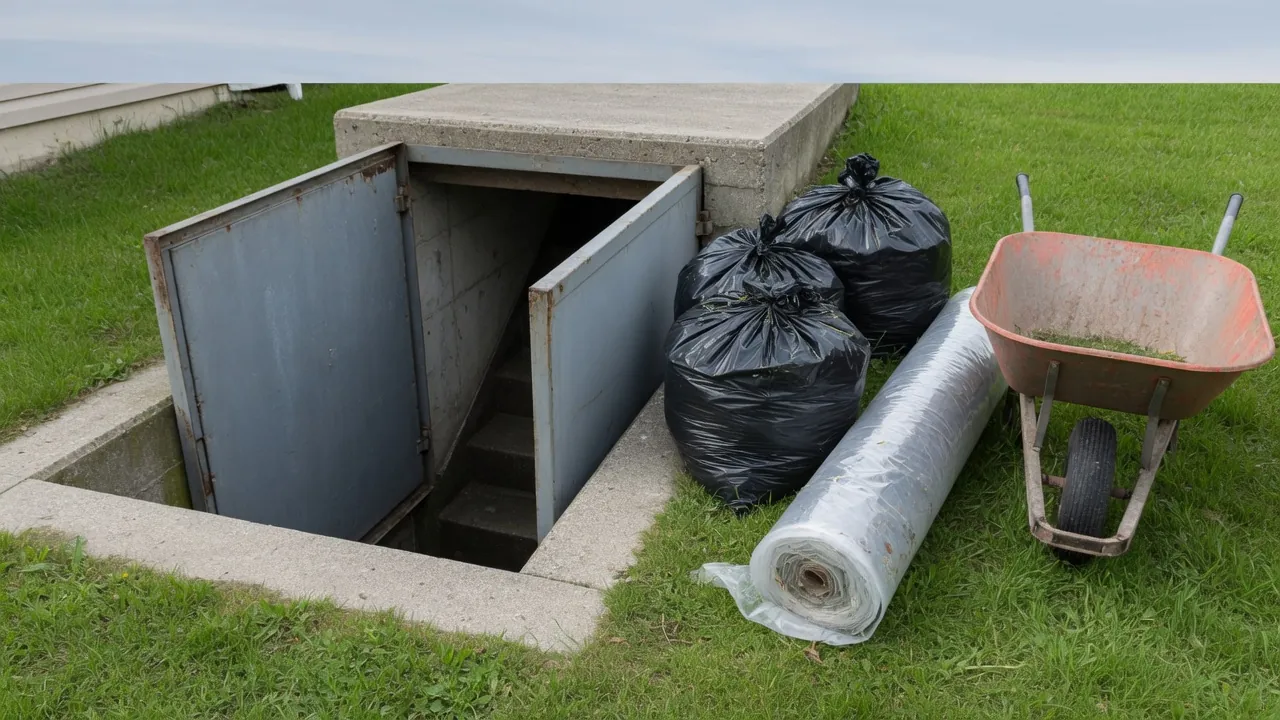
Tied black garbage bags, a roll of clear plastic and an orange wheelbarrow beside open metal cellar doors on a lawn.

The order the steps go in

Ohio's health department gives four stages, and the order is the point.

  1. Protect yourself. Boots, gloves, eye protection and washable clothes; Ohio adds an N95 mask and plenty of fresh air.
  2. Remove the water. A mop, wet vacuum or squeegee for standing water, then dehumidifiers and fans to lower the humidity.
  3. Sort and discard. Porous materials that touched sewage generally go, unless they can be thoroughly cleaned and disinfected.
  4. Clean, disinfect, dry. Hard surfaces get hot water and detergent first, because disinfection will not work on a dirty surface, then a disinfectant, then days of drying.

What a basement adds

Basements have features that make each stage harder. Colorado's health department treats concrete as the forgiving surface: wastewater harms it less than wood or wallboard, though some soaks in, so scrub the slab well and give it time to dry.

Drywall and insulation are the usual casualties. The CDC says contaminated drywall and insulation should be torn out and thrown away, and Colorado explains why: microbes burrow into soaked porous material and go on doing harm once the overflow ends. Seattle's utility gives a one-day window for sanitizing and repairing, or removing and discarding, wallboard and wall coverings.

Fans and the furnace need care. Indiana's health department says to leave whole-house air conditioning and furnace blowers off if wastewater reached the ducts, and the CDC says a generator or other gasoline engine must never run in a basement or garage.

Drying takes longer than people expect

Indiana's health department expects an enclosed basement to need weeks to dry, with microbes growing for as long as humidity stays high. Colorado adds that a musty smell afterward means something is still growing.

When to stop and hand it over

The CDC says anyone hurt or ill while cleaning should get medical care. Beyond that, Connecticut's scenarios are the usual signals to bring someone in: ducts affected, sewage that sat in finished space, or a job that has outgrown the tools.

The health risks have their own post on illness from sewage, and a space under the house follows different steps.

Nobody at this website does the scrubbing. A household that decides to hand the basement over can leave details through Contact Us, and a nearby contractor follows up.

Common questions

Not by Pittsburgh Water's account; its order is to repair first, let the sewage drain, and clean afterward.
Ohio's health department says carpet and padding usually come out and get replaced, though carpet might survive a thorough steam cleaning, with the padding still discarded.
Connecticut points to contaminated ductwork, sewage that sat in finished space beyond a day, and work too big or complex for the household.