Kitchen, Toilet and Yard Habits: How to Prevent Sewage Backup Where You Can
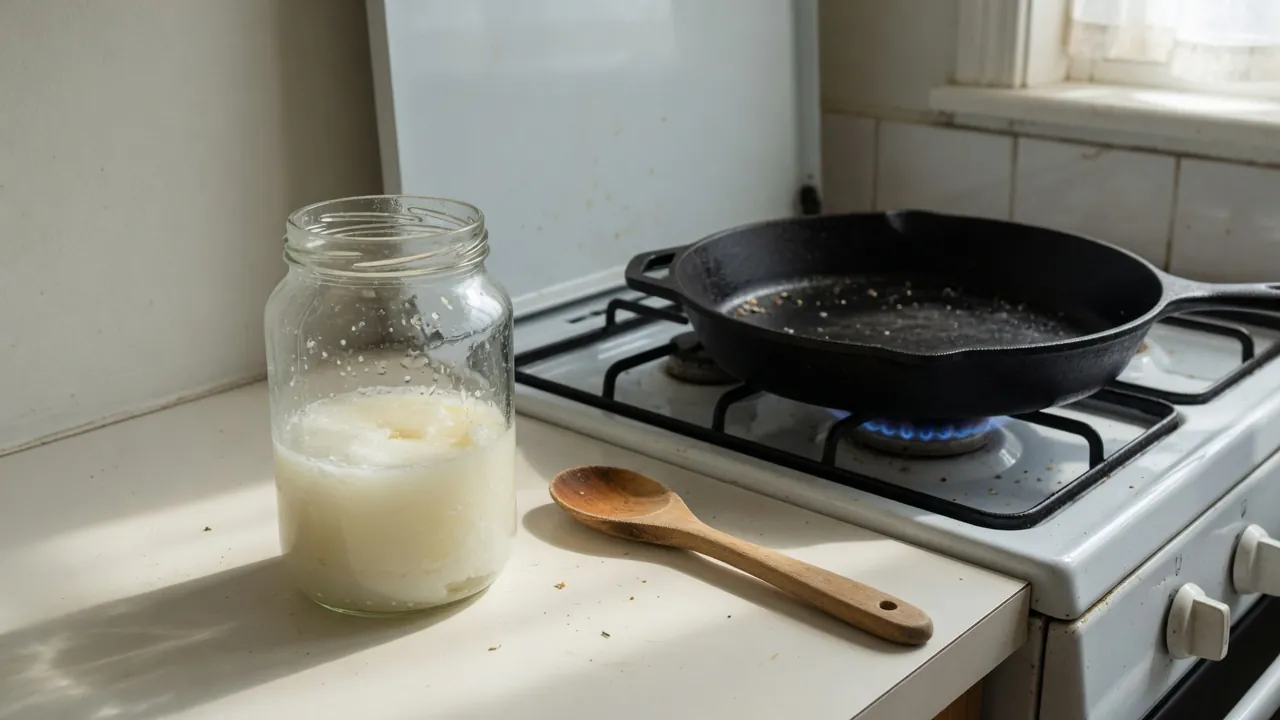
Glass jar half full of solid white fat and a wooden spoon beside a black skillet on a gas stove.

How to prevent sewage backup is mostly a story about small habits that keep a household line clear, plus a sober note about what habits cannot do. Utilities that answer backup calls tend to describe the same short list.

The list below is general and drawn from utility guidance. It is not a plumbing inspection, and it does not replace the Pittsburgh overview of what a backup involves.

Begin at the kitchen sink

Pittsburgh Water's "Defend Your Drains" page puts fats, oils and grease first. Poured down a kitchen drain, they harden inside household pipes and public sewers and restrict flow, and the blockages can push wastewater back into buildings. The utility's advice is to scrape plates into the trash or compost, wipe greasy dishes with a paper towel, and keep cooled grease in a sealed jar until it is full.

Naperville's utility says much the same: cooking oil poured down a drain can cool and solidify in the drain or in the owner's line.

Only paper belongs in a toilet

Pittsburgh Water reduces the rule to three items: pee, poop and toilet paper. It lists "flushable" wipes, paper towels and tissues among things that belong in the trash, and says even products labeled flushable contain plastic fibers that do not break down.

Naperville adds diapers and feminine products to the list, noting that unlike bathroom tissue they do not break down the way bathroom tissue does, and says wipes can weave into a large mass that clogs service lines.

Tree roots outdoors

Naperville reports that roots are the number one cause of sanitary sewer backups there, entering through cracks in pipes as they seek moisture. A county utility in Florida makes the same general point: a sewer line has many joints where roots can enter, so blockages build up without regular maintenance. A tree cannot be undone, but a planting choice made with the lateral in mind can be.

Checking the pipe cap

Indian River County describes a cleanout as a capped pipe, often three to four inches wide, found outside near the foundation and sometimes hidden by bushes or grass. Locating it before trouble starts saves time later, because opening the cap shows whether the clog is on the house side or the street side, and that finding decides who must clear it.

What habits cannot prevent

EPA's list of what makes sanitary sewers overflow includes line breaks, power failures and leaky defects that admit storm and ground water. None of those sits in a household's hands. Pittsburgh Water likewise blames an overloaded system during heavy rains for some backups. Prevention lowers the odds; it does not take them to zero.

Where each kind of backup starts, from the household pipe to the public main, is mapped in the causes of a backup sorted by location.

When a backup arrives regardless

A backup that reaches floors or belongings is when professional cleanup is useful. For Pittsburgh- or Denver-area homes we serve, call (855) 433-1072 or use Contact Us.

Prefer the phone?

Sewage in the house right now?

Call our crew and tell us what you're seeing.

Common questions

Utilities do not rank them. Pittsburgh Water leads with grease and wipes, while Naperville names roots as its top cause.
Madison's guidance lists grease, hair, dirt and solid materials such as disposable diapers as things that can block a drain.
Not entirely, since EPA lists stormwater overload as a cause outside a homeowner's control.