
Why Is Sewage Coming Up in My Yard? Three Likely Sources
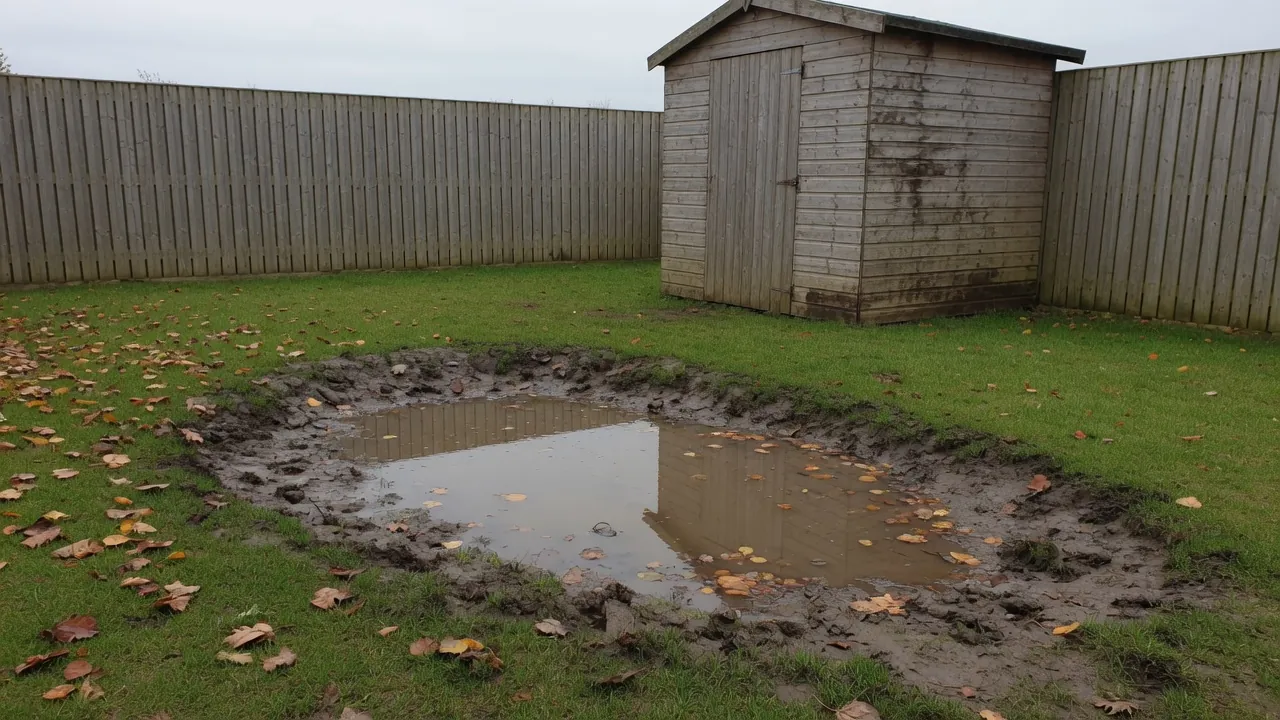
Large muddy puddle in a grassy backyard with fallen leaves, a wooden shed and a tall wooden fence behind it.

Why is sewage coming up in my yard is a question with at least three different answers, and which one applies depends on whether the house sits on a septic system or a public sewer. Wastewater at the surface is a sign that something below ground is full, broken or blocked.

This post is about causes. Once wastewater is on the ground, the handling steps are in a separate piece on dealing with wastewater lying on the ground; here the aim is to explain how it got there.

How a drainfield gives out

Snohomish County's health district lists sewage surfacing over the drainfield or around the tank among the signs of a failing septic system. The same list names soggy ground with unusually lush growth, slow-draining fixtures, sewage backing up into the house and a strong sewage odor. EPA adds soft, wet or spongy soil around the drainfield, especially when no major rain preceded it.

When the first sign is a smell rather than wet ground, how to place a sewage odor outside the house separates vents, septic tanks and sewer lines.

Roots and cracks can do it as well: Snohomish mentions roots in the tank or drainfield, cracks, leaks and clogs, and an overaccumulation of waste in the tank. Its advice is to hire a contractor to look.

If the house is on a public sewer

Here the usual suspect is the lateral, the pipe between the house and the street. Indian River County describes the cleanout, a capped pipe usually near the foundation. If wastewater flows from the opened cap, the county places the clog out toward the street or in the main, and where it sits decides who must clear it.

Naperville says roots are its number one cause of backups, entering through cracks in pipes.

A surcharged city main

Madison's engineers explain how a blocked or collapsed city main can push sewage out through street-level access points once the lines upstream fill. EPA adds that defective sewers admitting stormwater and groundwater can overload a system.

Terms matter when you report it; a short piece defining backups and overflows helps with the wording.

First steps while the source is a mystery

Connecticut's health department says kids and animals should stay away from sewage. Pittsburgh Water ties the start of cleanup to repair of the source, so scrubbing comes second.

EPA's advice for a septic system is to reach a local septic service provider, the local health department or a regulatory agency, and to avoid contact with sewage because it may carry harmful pathogens. With a public sewer, a call to the utility is the common first step.

Cleaning up once the cause is fixed

A contractor does not fix the source. When that is sorted out, Contact Us leads to a company that cleans up in your area; pipe and tank repairs are someone else's work.

Prefer the phone?

Sewage in the house right now?

Call our crew and tell us what you're seeing.

Common questions

No, but EPA and Snohomish both treat soggy or spongy ground there as a sign of possible system failure worth inspecting.
EPA lists stormwater and groundwater overload of a sewer as a cause of overflows, while its septic page calls soggy ground after dry weather the more telling sign.
A septic home is directed by EPA to a service provider, the health department or a regulatory agency, while a sewer customer typically starts with the utility.