
How to Clean Floor After Sewer Backup: A Material-by-Material Guide From Concrete Slab to Wood
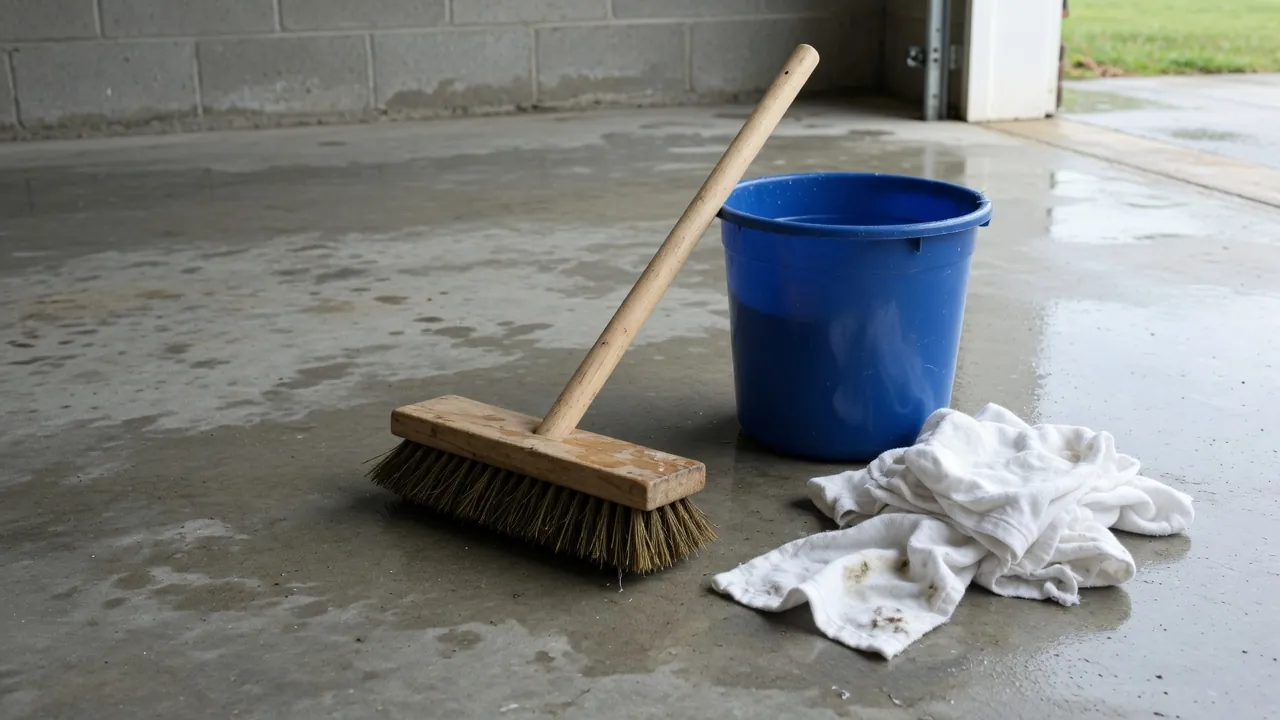
Wooden push broom leaning on a blue bucket with a white rag beside it on a wet gray concrete floor.

How to clean floor after sewer backup comes down to one question: can the surface be washed, or did sewage soak into it? Health departments answer by material, and the answers split neatly between hard, sealed surfaces and anything that can absorb.

The opening steps, before any scrubbing, are on a Pittsburgh page about what to do first after a backup. This post starts once the standing sewage is out and carpet, if any, has been dealt with.

Hard and sealed surfaces first

Ohio's health department gives a short routine for hard surfaces: hot water with a gentle detergent like dish soap, then a disinfectant. Disinfecting a dirty surface, it warns, accomplishes little. NDSU's extension service recommends two buckets, one for cleaning solution and one for rinse water, and says a disinfectant should come only after thorough cleaning because organic material makes disinfectants ineffective.

The disinfecting step has a page of its own, with product labels, strengths and contact time.

Concrete is tougher, not immune

How to clean concrete after sewer backup is the question many basement owners have, since a slab is the surface they picture. Indiana's health department says concrete is not harmed by wastewater the way wood or wallboard is, though liquid does penetrate it a little. Its instruction for concrete walls and floors is a thorough washing, then time to dry out.

A University of Michigan guidance document says microorganisms can colonize concrete, and even degrade it, when it is left wet and soiled with organic matter. The practical reading is that concrete should be washed and then dried, not just wiped.

Drywall, insulation and the furnace area add their own steps in what changes when the sewage is in a basement.

Wood, vinyl and anything laid over a subfloor

Layered flooring is the hard case. NDSU says that if sewage-contaminated water seeped under a floor covering, the covering has to come off even when the covering itself is not absorbent. Before new flooring is installed, it wants the subfloor cleaned, dried and sealed.

The Red Cross makes a related point about drying, suggesting that vinyl floor coverings and tile may need removal so the layers beneath can dry, and that it can take weeks or months for structural elements to dry thoroughly. Only then, it says, should floorcoverings be replaced. That advice is written for flood damage, so it is a drying lesson more than a sewage rule.

Moisture is the deadline

Indiana warns that drying out a basement can stretch to weeks, with microorganisms multiplying while humidity remains high. NDSU says no reconstruction should occur until wood has dried below fifteen percent moisture, or to the flooring maker's own figure.

Fans and dehumidifiers are the tools Indiana and Ohio name for air circulation.

Protection for the person doing the work

  • Boots, gloves and eye protection, all three of which Seattle's utility lists.
  • Ventilate the room.
  • Never mix bleach with ammonia; Seattle, Ohio and Connecticut each warn that it makes dangerous fumes.
  • Keep children and pets out until cleaning and disinfecting are finished, as Ohio says.

When floors are beyond a weekend project

Large areas, wet subfloors and finished basements are where do-it-yourself work gets uncertain. The Contact Us page is the way to ask about a cleanup company in your area; this site connects people with companies and has no crews.

Prefer the phone?

Sewage in the house right now?

Call our crew and tell us what you're seeing.

Common questions

Indiana calls for a thorough washing of concrete, then drying time, and Ohio's rule for hard surfaces is detergent first, then disinfectant.
NDSU says a covering that sewage seeped under has to be removed even when it is not absorbent.
NDSU names fifteen percent moisture for wood, or the figure from the flooring maker, before rebuilding starts.