
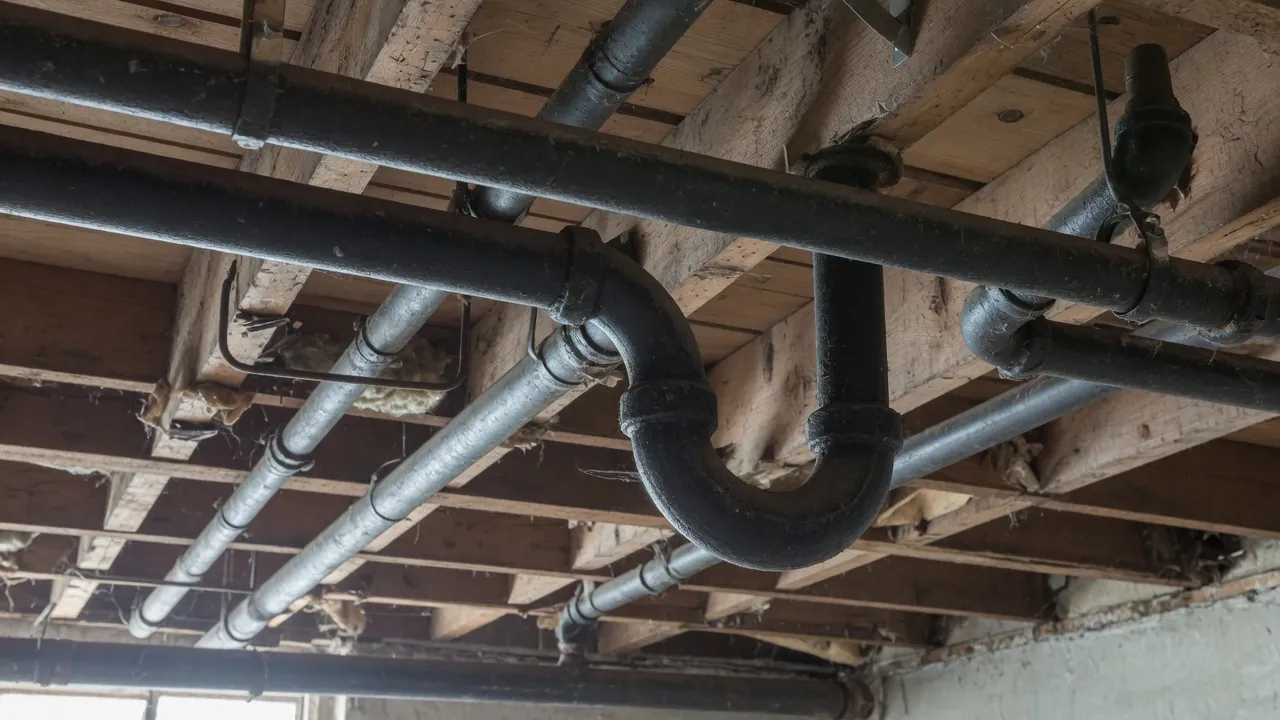
Meaning one: the floor drain trap
On a neighborhood sewer construction notice page, the authority tells customers to block their sewer trap with one gallon of water. It adds that sewer traps are typically found in the floor of the basement and look like a small drain. In that sense a sewer trap is the small drain in the basement floor.
The same page does not call it a fixture or a house trap, and the sewage backup and pipe ownership pages do not use the term at all.
Meaning two: the seal under every fixture
The plumbing code defines a trap as a fitting or device that provides a liquid seal to prevent the emission of sewer gases without materially affecting the flow of sewage or wastewater through it. Each plumbing fixture must be separately trapped by a liquid-seal trap, with limited exceptions. Seen this way, a trap is a seal against gas.
Meaning three: the house trap in older plumbing
The code also defines a building trap as a device or fitting installed in the building drain to prevent circulation of air between the building's drainage system and the building sewer, and it lists "house trap" as another name. Section 1002.6 says building (house) traps shall be prohibited.
That text is the 2021 plumbing code as published for Pennsylvania on a code-publishing website, not a Pittsburgh ordinance. Whether it governs an older house that already has one, or whether the city has amended it, is not something the sources settle.
What none of them does
Both code definitions are about gas and air, and Pittsburgh Water's description is about odors. None describes stopping sewage that is pushed back toward the house. For that the code names the backwater valve, which it requires where a fixture sits lower than the manhole cover of the nearest upstream manhole in the public sewer.
Pittsburgh Water's position on such devices is cautious: backwater valves must be considered on a case-by-case basis, and if not properly installed they can make the problem worse.
Causes according to the water authority
Its sewage backup page says backups are often caused by an overwhelmed sewer system during heavy rains or a blockage in the system, including tree-root cracks and buildups of grease, hair and other solids. If it is a broken or clogged main, the authority is responsible. If it is a broken or clogged lateral, the property owner is.
If you think there is an old trap in your house
None of the sources fetched says how common house traps are in Pittsburgh homes, and none recommends removing one. Identifying buried fittings is work for a plumber. If sewage is already coming up, the first-hour guide gives the order of calls, and the basement floor drain page helps read the clues.
Why a cleanup crew mentions plumbing
A floor-drain trap, a fixture trap and a house trap are plumbing devices. None of them is designed to hold back a sewer backup under pressure. This post explains the terms so a wet basement is easier to describe on a call. We diagnose cleanup needs; a plumber or the sewer utility handles pipe diagnosis and repair. The homepage summarizes how our crew fits next to that utility report.
Prefer the phone?
Sewage in the house right now?
Call our crew and tell us what you're seeing.
Frequently asked questions
What does Pittsburgh Water mean by a sewer trap?
On a construction notice page, Pittsburgh Water says sewer traps are typically found in the floor of the basement and look like a small drain, and it asks customers to block theirs with one gallon of water.
Is a house trap the same as the trap under a sink?
No. The code defines a fixture trap as a liquid seal that keeps sewer gas out, while a building trap sits in the building drain and prevents circulation of air between the building's drainage system and the building sewer.
Will a trap keep sewage from coming back into my house?
The definitions describe blocking gas and air, not backflow. The device the code names for sewage backflow is the backwater valve.