Sewer Backup vs Overflow: Two Terms, Two Different Problems
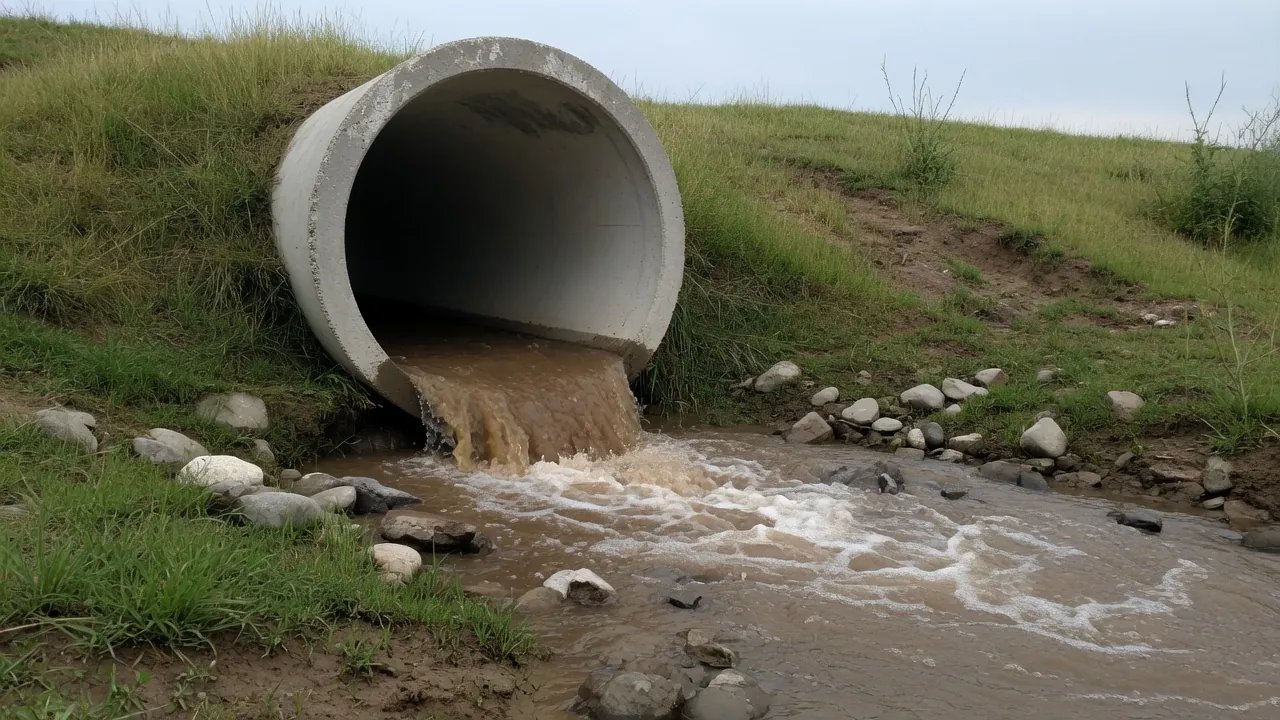
Gray concrete pipe set into a grassy slope pouring muddy brown water over rocks into a small stream.

Sewer backup vs overflow is a distinction that sounds like hair-splitting until it decides who responds. People use the words as if they mean the same thing, and the news about a river overflow can be mistaken for the sewage in a basement. They are related, but they are not the same event.

This post sorts out the terms. The Pittsburgh specifics, including what the river version means locally, are on the page about Pittsburgh sewage overflows.

The short definitions

Madison, Wisconsin's engineering division defines a sewer backup as a blockage, either in the homeowner's lateral or in the city main, that keeps sewage from moving down the pipes properly and can send it back into a home. It tends to appear at the lowest fixture in the house, whether a floor drain, toilet or shower.

EPA uses a different term for the other event: a sanitary sewer overflow, or SSO, is when a sanitary sewer releases raw sewage. EPA's causes run from blockages and line breaks to power failures, poor design and vandalism, plus leaks in old pipes that let storm and ground water swamp the system.

Which way the flow runs

In a backup, the sewage goes into a building through fixtures. Seattle's utility says backups happen when sewage or dirty water comes up a sink, toilet or drain, and usually when something blocks the sewer pipe.

In an overflow, Madison's description is that a plugged or collapsed city main fills the sewer upstream until sewage drains out of access structures in the street or terrace. That is an overflow. EPA's estimate of overflows each year explicitly leaves out sewage backups into buildings, so the agency counts the two separately.

Why the wording affects a homeowner

A backup in a house may be the homeowner's problem or the utility's, depending on where the blockage sits. Madison's page says city crews check the public main first. For Pittsburgh Water the lateral is the owner's job and the main is the authority's.

Utilities draw that line in different places, and how several utilities divide the public main from the private pipe shows the range.

An overflow outdoors is the system's problem by definition, and EPA notes that overflows may indicate improper operation and maintenance of the sewer.

Combined versus sanitary systems

EPA separates sanitary sewers, which carry household, commercial and industrial wastewater plus limited stormwater, from combined sewers, which are designed to carry large volumes of stormwater as well as sewage. Pittsburgh Water says it is moving toward separated systems, with one pipe for sanitary waste and another for stormwater.

Cleanup comes later

Neither word describes cleanup; both describe the cause. If sewage has entered a building, a request through Contact Us is passed to a cleanup contractor that serves where you live.

Prefer the phone?

Sewage in the house right now?

Call our crew and tell us what you're seeing.

Common questions

Madison describes both as results of blockages, so the same kind of fault can lead to either, but the terms name different places where the sewage ends up.
For a backup into a house, Naperville's utility prefers a call to the city before a plumber is hired, particularly after heavy rain.
No. EPA lists blockages, line breaks and power failures alongside stormwater overload.