How to Disinfect Sewage Backup Areas: Order, Strength and Contact Time
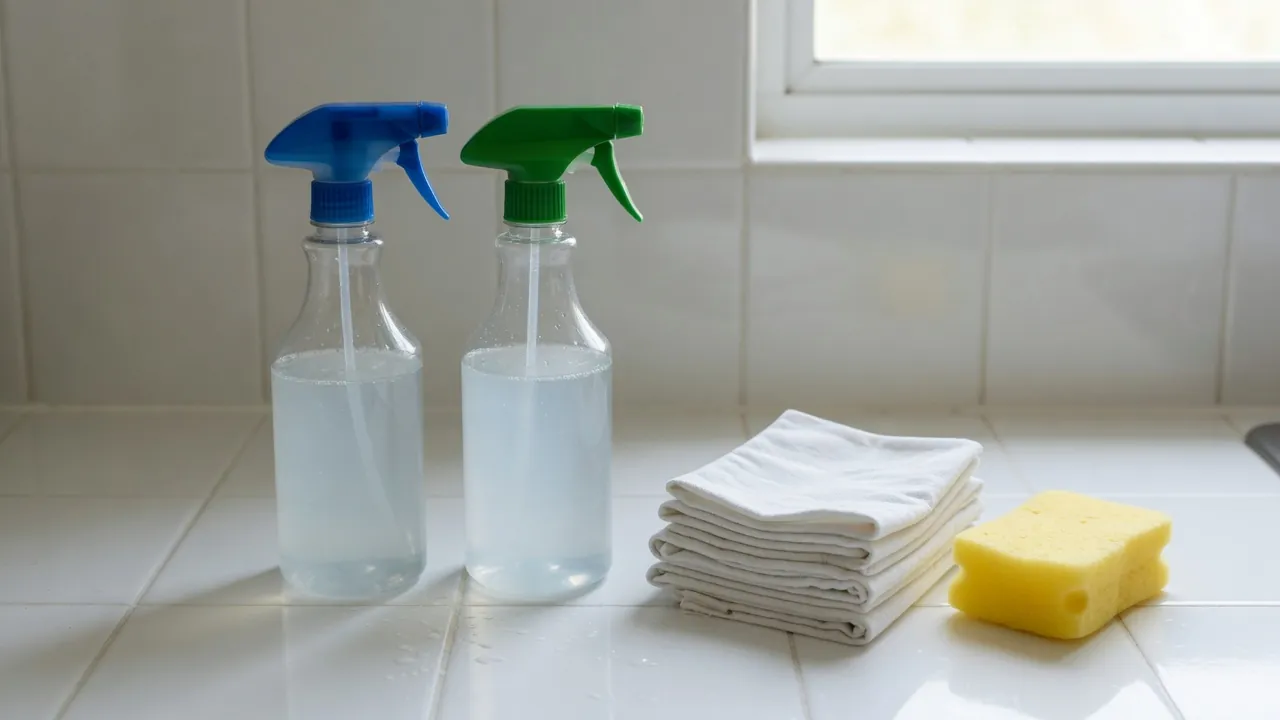
Two unlabelled spray bottles with blue and green nozzles beside folded white cloths and a yellow sponge on a white tiled counter.

How to disinfect sewage backup areas is a smaller question than how to clean one, and it is easy to get wrong in a specific way: disinfectant gets applied to surfaces that are still dirty, where it does little. Health agencies spend as much time on the sequence as on the product.

This post covers only the disinfecting step. The wider picture for Pittsburgh is on the page about sewage backups, and the washing that comes before is covered in a separate floor-cleaning post.

Dirt comes off before germs do

Ohio's health department warns that a disinfectant applied to a surface still carrying dirt will not work as intended. NDSU's extension service agrees and says why: biocides are rendered ineffective by organic material, so meticulous cleaning has to come first. Connecticut states it more sharply, saying not to skip the washing step or disinfection will be ineffective.

Which product

Two kinds of product turn up in the health sheets. Ohio and Connecticut both say a household cleaner labeled as bactericidal, which kills bacteria, or a bleach solution will do. NDSU adds a label test: use only biocides approved for the specific material and application, with an EPA registration number showing it as a disinfectant.

The bleach figures do not agree

Sources give different strengths, and none is the last word.

  • Ohio says EPA recommends half a cup of chlorine bleach per gallon of water.
  • Colorado's health department describes a quarter cup of bleach per gallon as an effective solution.
  • Connecticut's sheet gives one part bleach to nine parts water.

Rather than pick a number from a web page, follow the label on the product in hand and the instructions from the local health department. Fabrics are another limit: Colorado notes that most cannot take bleach without fading and may instead be cleaned with a quaternary ammonia product.

How long it must sit

Disinfectant has to sit on a surface before it works. Ohio and Colorado both put the minimum for a bleach solution at one minute on the surface, while Connecticut gives fifteen to twenty minutes, and the University of Michigan document asks for at least fifteen. The differences are a reason to read the product label, which sets the contact time for that product.

Handling the chemicals safely

  1. Never mix bleach with ammonia, which produces dangerous fumes (Seattle, Ohio, Connecticut and Colorado all say so).
  2. Ventilate; Indiana advises fresh air during and after disinfecting, using open windows, doors and fans.
  3. Wear gloves and eye protection.
  4. Let surfaces air-dry afterward, as Connecticut says.

What disinfectant cannot fix

The University of Michigan document notes that disinfectants may not kill spores. Porous materials that sewage soaked are a different problem; NDSU says they cannot be adequately cleaned and must be discarded. A contractor who works in your area can judge which things stay, and the Contact Us page sends the request along.

Prefer the phone?

Sewage in the house right now?

Call our crew and tell us what you're seeing.

Common questions

No. Ohio and NDSU both say disinfection is ineffective on surfaces that have not been cleaned first.
The sources show different strengths, from a quarter cup to half a cup per gallon, and none says more is better, so the label and local health department matter most.
Odor is a poor test. Ohio says backup odors are generally not harmful in themselves, and lingering musty smells point to moisture, according to Indiana.