
How to Get Rid of Sewage Smell After Backup When the Water Is Already Gone
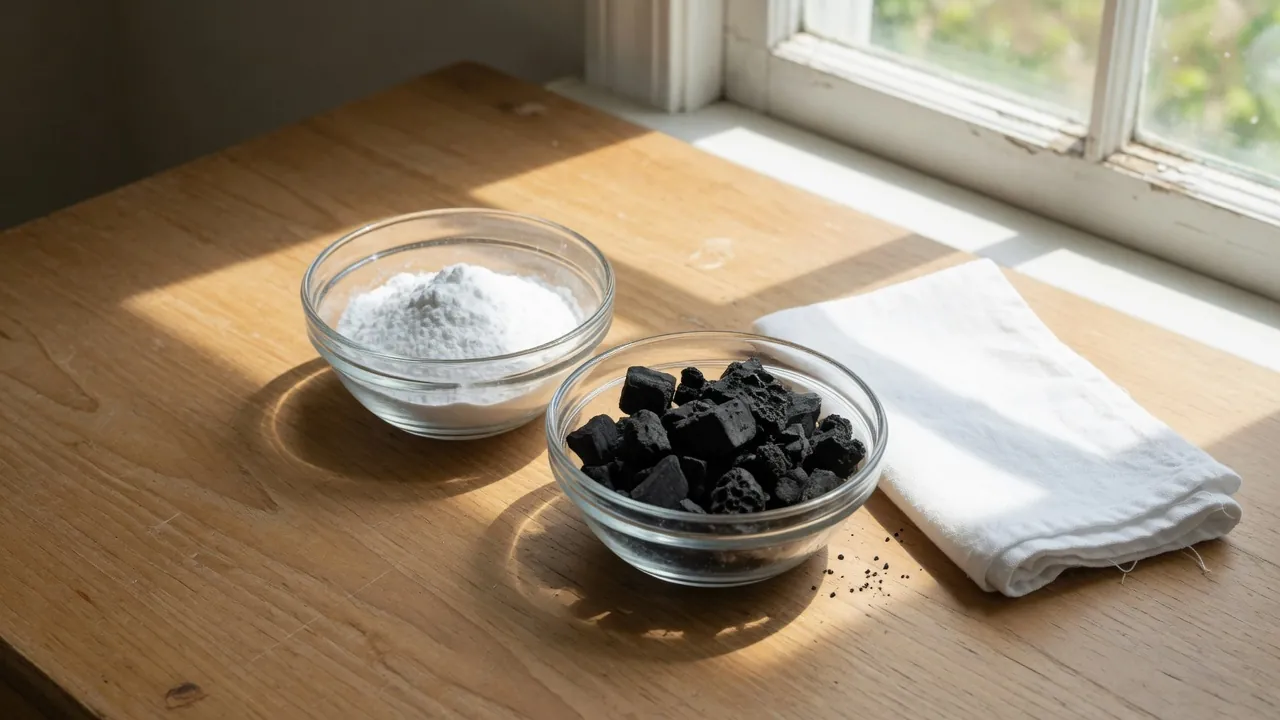
Two glass bowls, one with white powder and one with black charcoal chunks, beside a folded white towel on a sunlit wooden table.

How to get rid of sewage smell after backup cleanup is mostly a question of what was left behind. Health departments treat a lingering odor as a sign of something wet, soaked or not yet cleaned, which makes masking it with fragrance the wrong approach.

This post begins once the water has been removed. Early steps for Pittsburgh homes are on a page about the first moves in a backup, and what an odor means in the first place sits in a guide to sewer smell and the water seal.

Why the odor stays

Indiana's health department describes the pattern directly. A damaged area that is not cleaned and dried out well can keep a musty odor long after the overflow, and the department reads that smell as continued microbial growth. Drying a closed-in area like a basement or crawl space can take several weeks, and growth carries on while humidity stays high.

Ohio's guidance supports the point about timing: anything left wet beyond a day or two is at particular risk of mold.

The usual hiding places

  • Porous materials. NDSU's extension service says anything porous that sewage reached must be thrown out, carpet and padding included, since it will not come adequately clean.
  • Subfloors. If sewage-contaminated water got under a floor covering, NDSU says the covering needs to come out even when it is not absorbent, and the subfloor needs cleaning, drying and sealing before new flooring is installed.
  • Stored belongings. Indiana lists food, cosmetics, stuffed animals and baby toys that touched wastewater as items to discard.

Keeping the air moving and dry

Both Indiana and Ohio say to open the space and keep air moving. Indiana suggests opening closet and cabinet doors and using fans, dehumidifiers and window air conditioners, but not whole-house air conditioning or furnace blowers if ducts were hit by standing wastewater. Ohio adds that furniture should sit away from walls so air can circulate.

EPA's flood-cleanup page warns that failing to remove contaminated materials and reduce moisture can cause long-term health risks, because standing water and wet materials are a breeding ground for microorganisms.

A sensible order of work

  1. Remove what cannot be cleaned.
  2. Clean hard surfaces with detergent before disinfecting; Ohio says disinfection fails on dirty surfaces.
  3. Dry the space thoroughly with moving air and dehumidification.
  4. Only then look at deodorizing, and keep windows open while using any cleaning products. Indiana says to provide fresh air during and after disinfecting and cleaning.

Soil outdoors, and odor that won't leave

Where wastewater soaked into soil, Indiana recommends treating it with garden lime to reduce odor. Inside, a smell that survives drying usually means material is still holding contamination, which is when professional cleanup needs to look at it. Where that happens in a home we serve, call (855) 433-1072 or use Contact Us.

Prefer the phone?

Sewage in the house right now?

Call our crew and tell us what you're seeing.

Common questions

The health sheets do not recommend them. Indiana ties a lingering smell to continued microbial growth, which only cleaning and drying address.
Ohio's sheet calls backup odor unpleasant yet generally harmless in itself, with the contamination behind it carrying the risk.
Indiana says microorganisms keep growing as long as humidity remains high in the damaged area, so moisture left behind can bring a musty smell back.