
Is the City Responsible for Sewer Backup? Public Main Versus Private Pipe
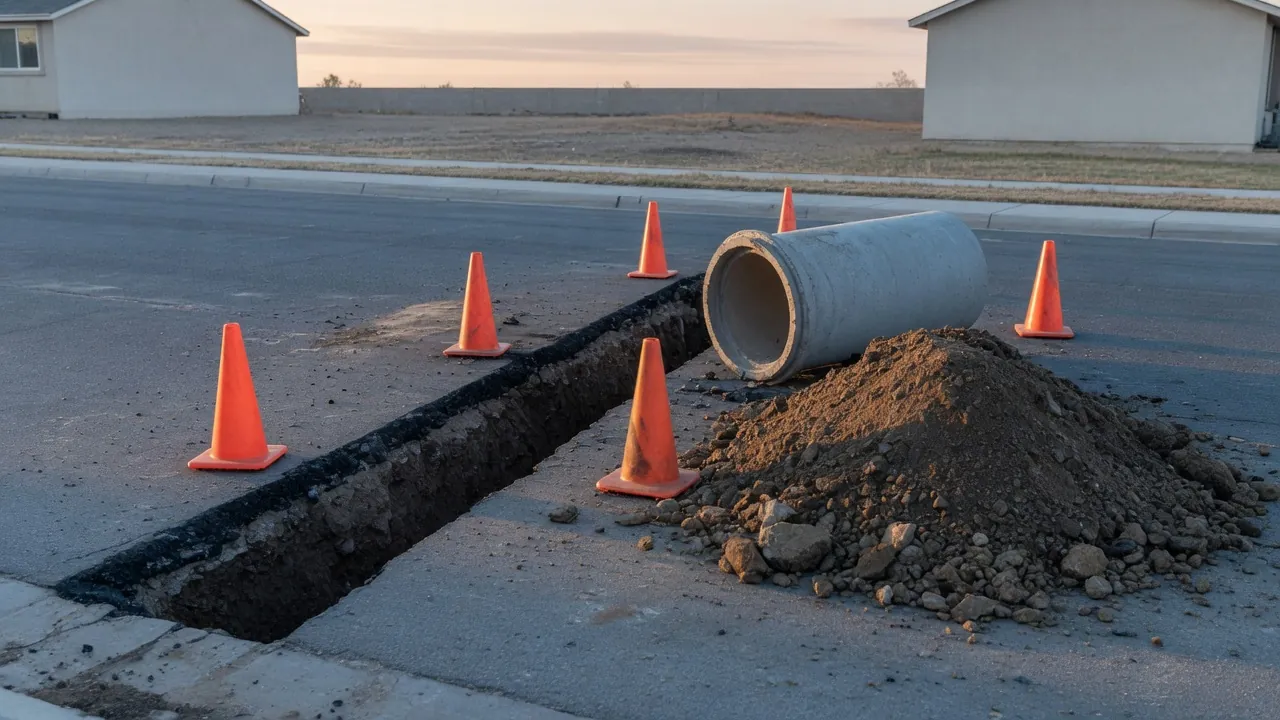
Deep trench cut through an asphalt street with a large concrete pipe, a mound of soil and orange traffic cones beside it.

Is the city responsible for sewer backup? Sometimes, and the dividing line is almost always the same: the public main in the street belongs to the utility, and the lateral that runs from the house to it often belongs to the property owner. Where exactly the handover happens is set locally, so the examples below show a range, not a rule that holds everywhere.

This post does not state what any particular city will do. It collects what several utilities say about their own systems, and it ends with questions worth asking your own.

What a utility says about its own mains

The examples differ in the details but agree on the structure.

  • Pittsburgh Water takes a clogged or broken main as its own job and a clogged or broken lateral as the owner's.
  • Naperville, Illinois says homeowners maintain the service line from home to main, while the city answers for backups caused by structural defects, such as a cracked pipe, and total blockages in the right-of-way.
  • Seattle Public Utilities says it will repair the public mainline if it is damaged or obstructed, or if the city's part of the connection has failed.
  • Indian River County, Florida divides responsibility at the property line: the utility department on its side, the homeowner on the house side.

The Pittsburgh-area program 3 Rivers Wet Weather says the split varies: some communities hand the owner the stretch to the property line and keep the rest, and others put the entire lateral on the owner.

Main versus lateral on the street side

Several utilities offer to inspect the public pipe first. Madison's crews check the public main, and if sewage flows back down the floor drain afterward, the main was the cause; if the water stays, the trouble is in the private lateral. Naperville asks residents to notify the city before calling a plumber for a floor-drain backup. Seattle works the other way and suggests calling a plumber, then contacting the utility if the contractor suspects the mainline.

The order varies, which is why checking your own utility's page matters.

Fixtures and pipes under the roof

Even when the cause lies in the public pipe, the interior is a separate matter. Madison says homeowners are responsible for any cleanup on their property and its crews will not enter the home to assist, although homeowners can file a claim with the city for a sewer backup. Seattle likewise says a claim for reimbursement can be filed if the backup was caused by a problem in its own sewer.

Pittsburgh Water adds a caution from the insurance side: a standard policy might not respond to backup damage, and the coverage may be sold on its own. The question of coverage is taken up on the Pittsburgh page about backup insurance.

Questions worth putting to your own utility

  • Where does the public main end and my lateral begin at this address?
  • Can a crew check the main before I call a plumber?
  • If the main was the cause, is there a claim process, and what does it require?
  • Who do I notify if the sewage reaches the street or yard?

Documentation helps whichever way it goes; Seattle suggests talking with an insurance agent about how to record damage before repairs start. Pittsburgh's reporting steps show what the Pittsburgh Water report involves.

Where outside help comes in

None of this is the same as having the room cleaned, and a separate explainer describes how a request moves from this site to a contractor. This website does not clean; it refers. Details left on the Contact Us page are handed to a contractor serving the address, which then walks through the job with the household.

Prefer the phone?

Sewage in the house right now?

Call our crew and tell us what you're seeing.

Common questions

Madison says its crews do not enter the home to help with cleanup and that homeowners are responsible for cleanup on their property, though a claim can be filed.
No. 3 Rivers Wet Weather says some communities take on the stretch from the property line to the main, while others leave all of it with the owner.
Pittsburgh Water cautions that a standard policy might not respond to a sewage backup, so the wording of the policy is the thing to read.