
Sewer Gas Smell in Bathroom: Which Fixture Is It?

A sewer gas smell in bathroom air usually has a plumbing explanation, and a bathroom is a good place to find it because it holds several drains in one small room. The trick is to narrow the odor to one fixture rather than guess.

This is a plumbing-leaning topic, so the page stays with what utilities and health departments say about it. Odor that comes with water on the floor is a different matter and belongs with an odor guide that also covers wet floors.
Sniff your way to one fixture

Start by closing the door and noting where the smell is strongest: the toilet, the tub or shower, the sink, or a floor drain. Kerrville's utility says that when the smell is mainly around a sink, the sink's overflow channel inside the bowl near the rim can hold debris that causes odor. Other fixtures have their own failure points.

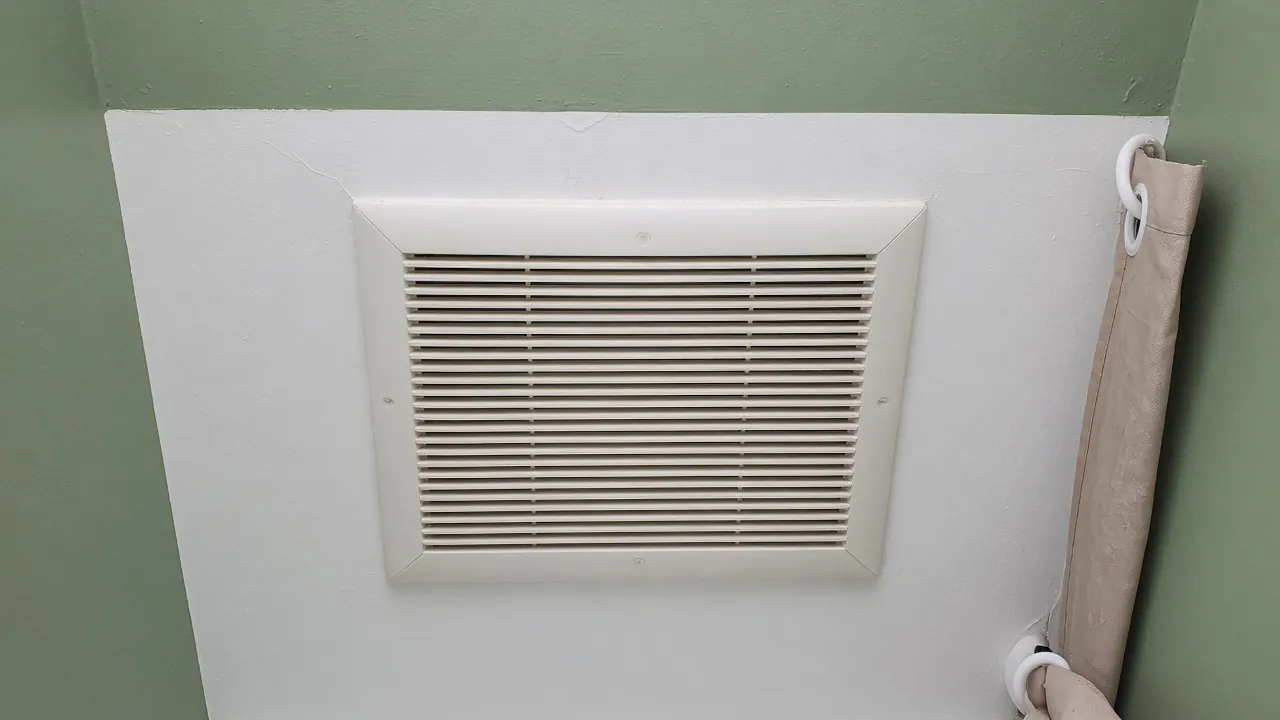
White louvered vent cover on a sage green wall beside a tan curtain.

The toilet

A toilet sits on a seal, and Kerrville's test is a push: a sound toilet holds firm against a few pounds of sideways force, and one that shifts has lost its wax ring. A plumber may be needed to replace it, the utility adds.

The tub, shower and sink

Each of these has a trap, a curved piece of pipe that stays filled with water to block gas. Albuquerque's utility says odor can occur when P-traps dry out, and running water through the trap for 60 seconds is its first step. A guest bath shower that nobody uses is the standard case.

If a trap is full and the smell persists, Fairfax County points to the vent that carries gas out through the roof. Leaves or bird nests can plug a vent, and sewer gas can then back up into the house.

The bathroom floor drain, if there is one

A floor drain is a trap that seldom gets refilled. Denver's wastewater division says a dry drain can let foul odors into the house and suggests adding water to it monthly. If water coming out of this drain is the problem, not gas, it is a backup and the right reading is in the page on floor drains that back up.

Gas content, briefly

Wisconsin's health department treats sewer gas as the gases thrown off by decaying household and industrial waste, with hydrogen sulfide and ammonia as the most toxic components. A faint bathroom odor is a nuisance and a plumbing signal, but the same source lists headaches, dizziness, drowsiness and nausea as symptoms that suggest gas exposure and says to see a doctor if they occur and a leak is suspected.

Calling a plumber

Kerrville says a failed wax ring, missing traps or vents, or a blocked vent may call for a plumber. A contractor for sewage cleanup is a different trade, and Contact Us only helps where wastewater, not gas, has reached the room.

Common questions

Denver's wastewater division suggests adding water to drains monthly; Albuquerque's utility prescribes about a minute of running water when odor appears.
Kerrville's guidance says a toilet that rocks has a failed wax ring, which can let gas into the room.
Wisconsin's health department links headaches, dizziness and nausea to gas exposure, so symptoms in a home with a suspected leak are worth taking seriously and bringing to a doctor.